
PROTEUS AI
Read what happens inside the mold.
Correct the drift.
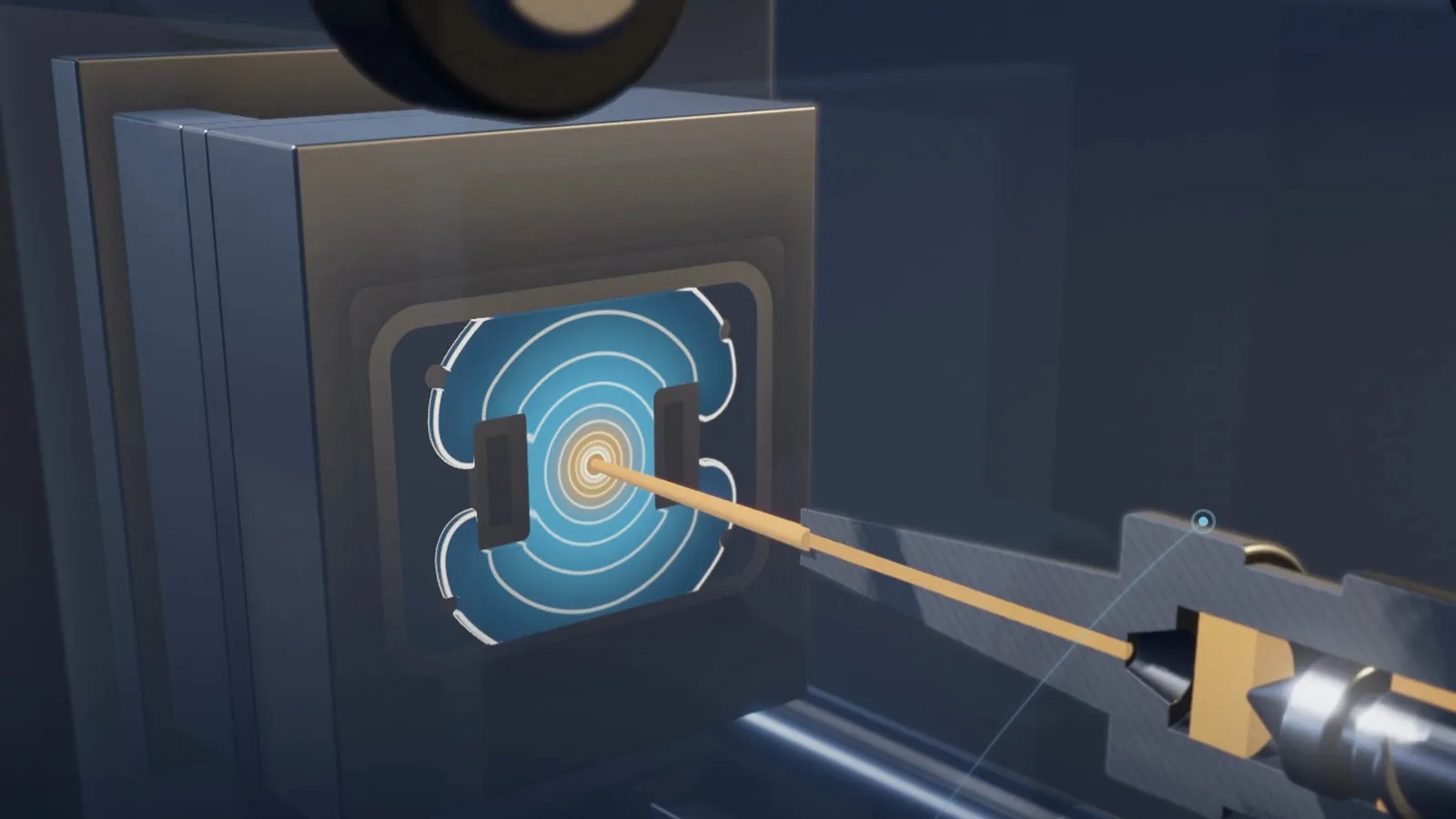
Proteus AI reads the molding state in real time from existing machine data alone, with no added sensors, and when signs of abnormality appear it automatically maintains the optimal operating conditions within safe limits.
Not just showing data, but understanding the process, and connecting it to control.The problem
Same mold, same settings.
Different results.
Small changes in resin lot, temperature and machine condition alter how each shot fills. Seeing inside the mold directly means machining it and adding sensors and wiring, so most lines are still tuned by experience and repeated trial shots — and drift is often discovered only as defects.
Control modes
Two ways to correct, matched to each machine.
Not every machine exposes the same data at the same speed. Proteus AI matches the timing of its corrections to the integration each machine can support.
Shot to shot
Existing machines
Within the cycle
Machines with real-time integration
Concept illustration · not real data
How it works
From real-time diagnosis to optimal control, an unwavering production flow is completed on site.
01
Machine signal connection
With no added sensors, basic operating signals from existing injection machines are received on site immediately.
02
Real-time state diagnosis
A proprietary process-analysis engine identifies the otherwise invisible molding state and subtle deviations in real time.
03
Optimal condition calculation
When signs of a quality problem appear, the most effective operating conditions are derived within the machine’s safe operating range.
04
Automatic control and capitalization
The best conditions are applied stably to suit the site’s equipment, and all history accumulates as a quality asset.
What it does
Without additional equipment modification, it precisely diagnoses the process from existing injection-machine data alone and maintains the optimal state.
- 01
Sensorless process monitoring
Without fitting separate in-mold sensors, it reads the otherwise invisible molding state inside the mold in real time from basic machine signals alone.
- 02
Intelligent process-deviation correction
When subtle signs of abnormality are detected during the process, a proprietary process-analysis engine derives the optimal operating conditions within safe equipment limits, even without operator intervention.
- 03
Flexible control tailored to the equipment environment
From older injection machines to the latest smart equipment, defect rates are controlled in the most effective and stable way for each site’s equipment specifications and communication environment.
- 04
Self-contained, ultra-low-latency processing on site
Runs on an edge device linked to the machine controller, so decisions are made next to the machine rather than in a remote cloud.
- 05
Continuously evolving quality stabilization
All production history and quality results become assets that keep the process from wavering, and the more it is used, the more it establishes molding standards optimized for your site.
Straight answers
Current scope and considerations
We design a solution optimized for your equipment and process environment.
- Today
The current focus is injection molding, in machine-integration collaboration with injection-molding machine manufacturer Woojin Plaimm.
- Depends on
The best operating mode depends on the age and specifications of your equipment. A prior assessment identifies the most suitable integration method for each machine.
- Depends on
Safe operating ranges and operating standards are set together, reflecting your site engineers’ know-how and respecting existing work standards.
- Not claimed
Proteus AI is not presented as a universal controller for every machine; compatibility is assessed per machine and controller.
- Future
Processes beyond injection molding are potential applications for future assessment, and can be supported through partnership and technical discussion.
Where it applies
Building on process-optimization technology proven on injection-molding floors, we are extending its application to a range of manufacturing processes that need precise quality control.
Injection molding
Comprehensively supports shorter production preparation (setup) times and consistent quality in volume production.
Technical validationDie casting · press equipment
Preventing subtle quality deviation and minimizing defect rates in high-temperature, high-pressure forming.
Potential applicationExtrusion · blow molding
Securing process stability and yield in long continuous production runs.
Potential applicationCNC · machine tools
Preventing machining errors as machine condition changes, and maintaining precision.
Potential applicationLegacy equipment upgrades
Moving aging equipment to a smart manufacturing environment without the burden of modification or line stoppage.
Potential application

PROTEUS AI
Could Proteus AI work on your line?
Tell us about your machines, controllers and process challenge. We’ll review feasibility and a sensible starting scope with you.